
Decoding the UNESCO 'Trojan' Strategy: How Cambodia Uses Information Warfare to Claim 'Thai Dress' as Khmer Heritage
An analysis of Cambodian authorities' strategy to sneak 'Chut Thai' into UNESCO dossiers via traditional wedding registration files, attempting to claim rights over Royal Thai Traditional Dresses after the 'Love Destiny' phenomenon swept away native Sampot attire to near extinction.
Cultural Information Warfare: How Cambodia Leverages UNESCO to Co-opt 'Thai Dress'
Just two or three decades ago, attending a wedding in Phnom Penh meant seeing the bride and groom dressed in "Sampot"—a traditional waist cloth paired with a classic short sabai (breastcloth). This textile craftsmanship represents a rich historical legacy that the Khmer people have proudly cherished for generations.
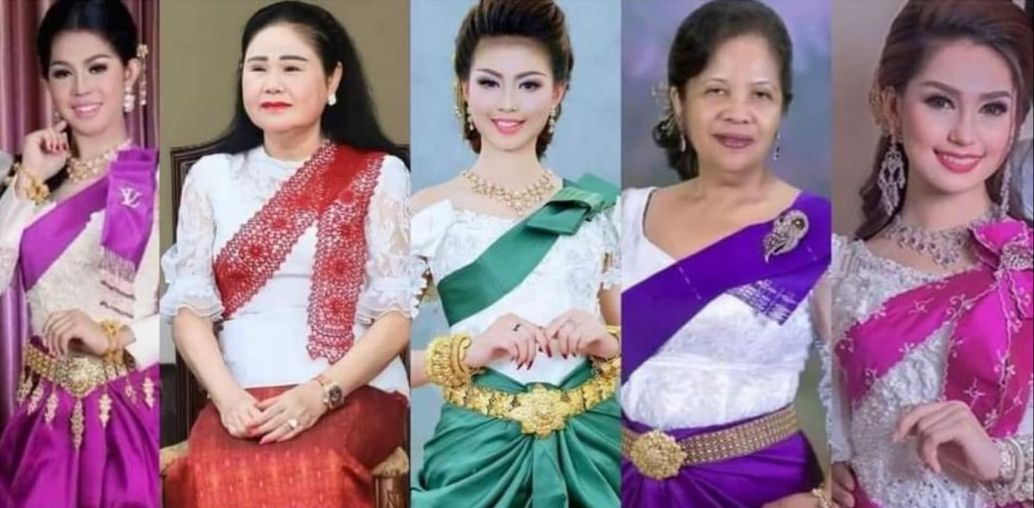
Fast forward to high-end contemporary Cambodian weddings today, and a strikingly different picture emerges: brides adorned in "Chut Thai Chakri" or "Chut Thai Siwalai"—wearing long, elaborately gold-embroidered sabai shawls and traditional Thai-style gold jewelry. Without Khmer signage or Cambodian flags prominently displayed, any observer would undoubtedly assume they were witnessing a Thai wedding in Bangkok or Chiang Mai.
This paradox is far more than a simple cross-border fashion trend; it represents a systematic and sophisticated strategy of "cultural assimilation and laundering."
---
1. From Thai Soft Power to the Decline of 'Sampot'
In 2018, the hit Thai historical drama Love Destiny (Bupphesanniwat) unleashed a massive wave of soft power across Cambodian society. Captivated by the elegance of traditional Thai attire, countless Cambodians enthusiastically rented Thai dresses for photo shoots at historical ruins, beauty pageants, and eventually, wedding ceremonies.
Consequently, "Chut Thai" overshadowed and effectively replaced the authentic Cambodian "Sampot", pushing the native attire toward near-extinction in everyday practice—often without locals realizing the gradual erasure of their own cultural identity.
---
2. Rewriting History: Co-opting What Could Not Be Banned
Initially, Cambodian authorities fully acknowledged that these garments were "Thai attire." Official records document cases where authorities strictly prohibited tourists from wearing Thai dress for photo shoots at Angkor Wat, explicitly identifying them as foreign clothing, alongside public warnings against overusing Thai attire.
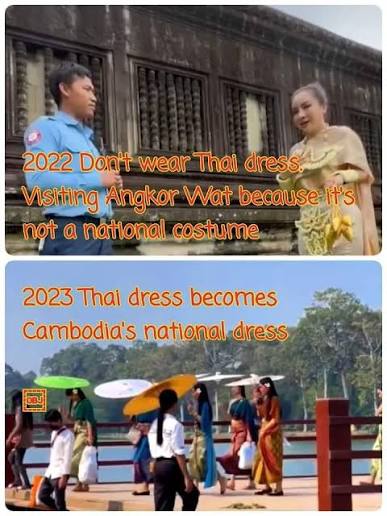
Cambodian authorities initially banned wearing Thai dresses at Angkor Wat citing foreign (Thai) origin, but later claimed the garments as native Cambodian heritage.
However, as popular adoption grew overwhelming, official strategy swiftly shifted: from suppression to appropriation.
State-controlled media and coordinated social media campaigns began disseminating propaganda aimed at reshaping public perception. A new narrative was fabricated: "This style of wedding attire is actually ancient Khmer dress, which Thailand stole from Cambodia."
In reality, undeniable global historical evidence records that the eight styles of "Chut Thai Phra Ratchaniyom" (Royal Thai Traditional Dresses) were systematically researched, standardized, and designed during the 1960s under the royal patronage of Her Majesty Queen Sirikit The Queen Mother, in collaboration with international fashion designers. These origin facts are thoroughly documented through historical photographs, records, and textile archives exhibited in world-class museums globally.
---
3. The Trojan Horse Strategy: Smuggling Items into UNESCO Dossiers
Cambodian authorities are well aware that directly submitting "Thai Dress" for UNESCO Intangible Cultural Heritage status would result in immediate rejection, as Thailand's ownership and international association with Royal Thai Dresses are indisputable.
To circumvent this obstacle, Cambodia adopted a "Trojan Horse Strategy."
Cambodia prepared a UNESCO dossier to register "Khmer Traditional Wedding" under Intangible Cultural Heritage (ICH)—a broad cultural umbrella category. Embedded within the application file are photos, videos, and visual documentation featuring brides wearing modern adapted "Thai dress."
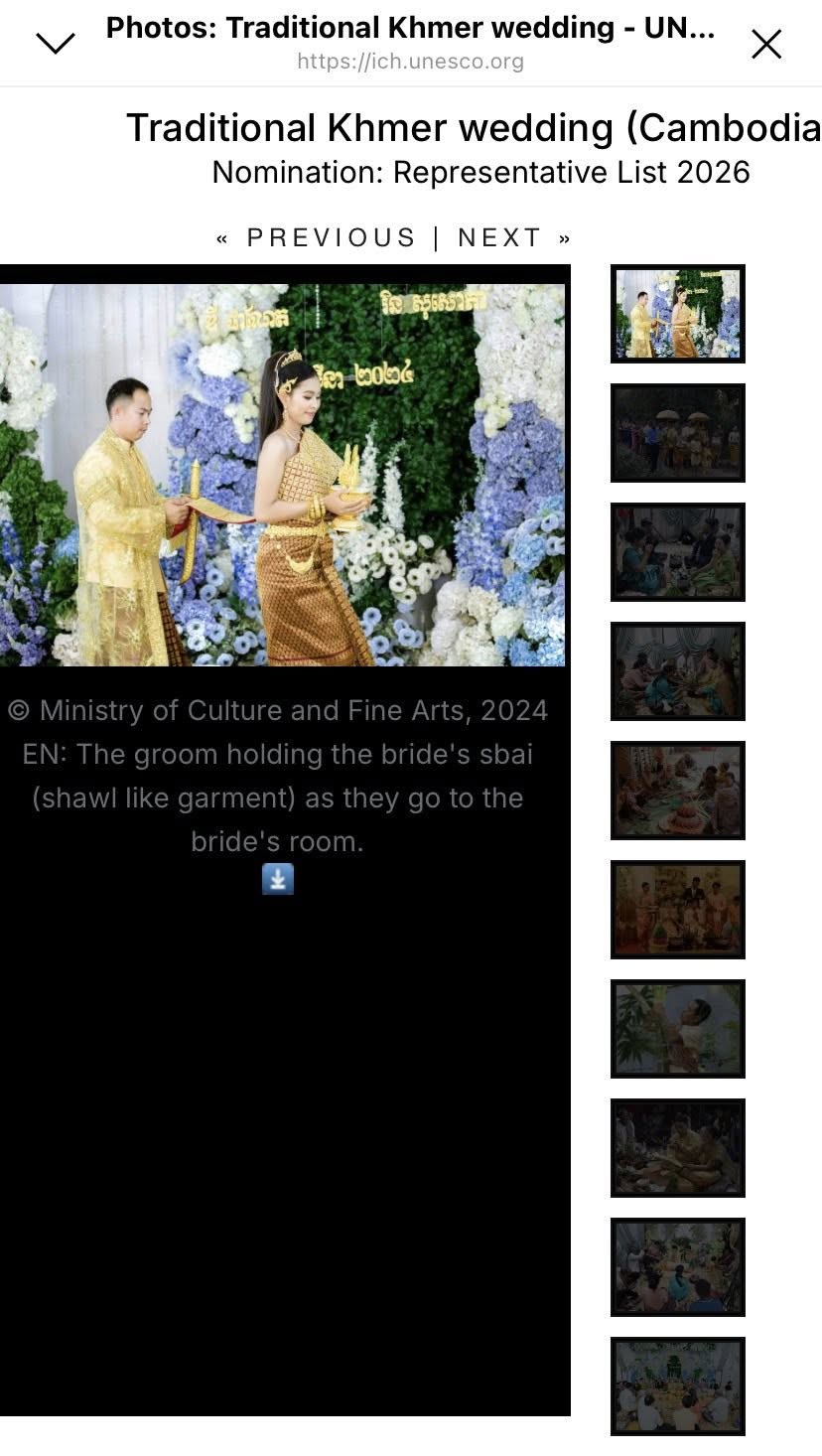
Images of Thai dresses quietly included in Cambodia's UNESCO submission labeled as 'Ancient Khmer Wedding Attire', despite gaining popularity in Cambodia only recently due to Thai dramas.
The true objective of this maneuver is:
Should UNESCO approve the umbrella registration for "Traditional Wedding Customs," state propaganda mechanisms can immediately claim to domestic and international audiences that "UNESCO has certified these wedding garments (which are actually Thai dresses) as Cambodian heritage." This tactic mirrors methods previously employed regarding other cultural elements.
---
Conclusion: Protecting Cultural Wisdom and International Scrutiny
In truth, the authentic Sampot and native Cambodian heritage possess inherent charm, dignity, and historical value without any need to appropriate the wisdom of neighboring nations. Attempting to distort facts and embed imagery of Thai dress into international dossiers serves only to diminish one's own cultural standing in the eyes of the global community.
This situation serves as a critical case study demanding vigilant and rigorous scrutiny from the UNESCO Intergovernmental Committee and international academic bodies. Cultural heritage belonging to humanity must not be exploited as an instrument for state propaganda or transnational cultural appropriation.
---
International Reference Links
1. Queen Sirikit Museum of Textiles (Official Heritage Archive):
Official archive documenting the design history and textile evidence of Royal Thai Traditional Dresses
2. UNESCO Intangible Cultural Heritage (Official Database):
https://ich.unesco.org/.gov / .edu
Official database and criteria for international intangible cultural heritage registrations
3. Metropolitan Museum of Art - Thai Royal Textiles & Costume Collection:
https://www.metmuseum.org/art/collection/search
World-renowned museum cataloging and displaying Southeast Asian costume history
4. The Craft Culture Center (SACIT - Sustainable Arts and Crafts Institute of Thailand):
https://www.sacit.or.th/.gov / .edu
Institute promoting Thai arts and crafts, preserving traditional Thai textiles and ancient embroidered sabai techniques
5. Bangkok Post - Cultural Heritage & Soft Power Coverage:
https://www.bangkokpost.com/thailand/general/
International English-language news outlet covering cultural disputes and UNESCO dossier developments